
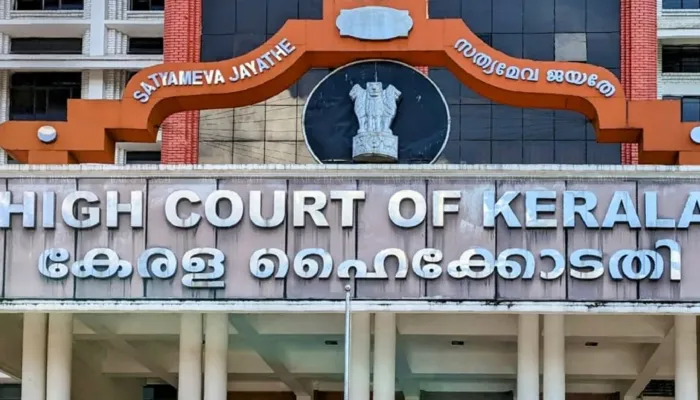
On Tuesday (12th March), the Supreme Court Collegium rejected the Central government’s objection to advocate Manoj Pulamby Madhavan’s appointment as a Kerala High Court judge. The Central government had opposed Madhavan’s nomination since he was a supporter of the Communist Party of India (Marxist) (CPI(M)) and had previously worked as a Government Pleader in Kerala during the Left Democratic Front (LDF) government’s tenure in 2010 and 2016-2021.
“The input that the candidate is considered to be a CPI(M) sympathizer is otherwise vague and bereft of cogent grounds. Even otherwise, the mere fact that the candidate has had a political background may not be a sufficient reason in all cases,” the Collegium said while rejecting the Centre’s input.
On 12th March, the Collegium nominated six attorneys’ names, including Madhavan, for appointment as Kerala High Court judges.
Madhavan belongs to the Scheduled Caste community and has 35 documented judgments to his credit. The Union Law Ministry’s Department of Justice, on the other hand, opposed his promotion. “Manoj Pulamby Madhavan is considered to be a CPI(M) sympathizer. He was appointed as Government Pleader in 2010 and 2016-2021 by the LDF Government,” it said.
The Collegium responded by remarking that the claim that Madhavan “is considered to be a CPI(M) sympathizer” is exceedingly ambiguous. “Similarly, that he was appointed as a Government Pleader in 2010 and 2016-2021 by the LDF Government does not constitute a valid ground to reject his candidature,” the Collegium said.
In fact, the candidate’s nomination as a Government Pleader would imply that he has appropriate expertise in managing matters in which the State is a party in several fields of law, according to the judge’s decision.
Regarding the candidate’s alleged past political background, the Collegium noted that a lawyer was recently appointed as a judge of a High Court despite being an office bearer of a political party before her elevation.
Further Manoj’s position as a Scheduled Caste (SC) candidate, paired with his vast legal expertise, was deemed “worthy of being appointed as a Judge of the High Court,” according to the collegium.
The resolution went on to say that his performance having been observed by the members of the Collegium of the High Court who had to observe his competence and conduct as a lawyer, their opinion should be given due weightage.” As a result of their observations and evaluations, the Collegium found that Manoj is qualified and appropriate for appointment as a High Court Judge.
Under CAA, the responsibility of the committees that will verify documentation to grant citizenship at the district and state level predominantly will constitute officers of the Central government, with nominal representation from the respective state/ union territories (UT).
Former Secretary-General of Lok Sabha, PDT Achary, told India Today, “States would have no other option but to implement the law passed by Parliament. In case of any grievances by the state, they can always approach the Supreme Court if they feel that there is any violation of the fundamental rights of its citizens in any way.”
Centre’s dominance in committees granting citizenship
The Ministry of Home Affairs (MHA) has ensured heavy dominance of Central government officials in the committees responsible for the decision-making process under the CAA, the Centre has instructed the Census officials and the Indian Postal Service to process the citizenship applications additionally, appointing the responsibility of conducting background checks with the Central security agencies such as Intelligence Bureau (IB).
The appointed committees, the empowered committee (EC), and the district-level committee (DLC) who will verify and decide on citizenship will be headed by the Central government officials and will have the option to not involve the respective state representative in their decisions.
The EC is headed by the director of the census operations who will directly report to the census commissioner and Registrar General of India, who work under the Ministry of Home Affairs.
At the district level, the committee will operate under the senior superintendent or superintendent of posts, which will include Central government officers, with only one invitee from the state government.