
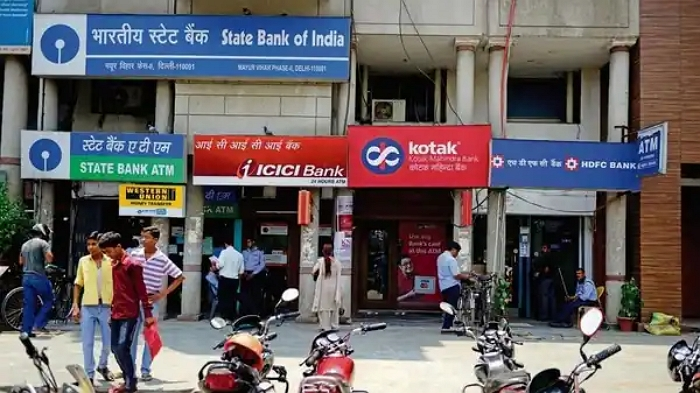
The Reserve Bank of India on 20 March advised all banks dealing with government transactions to open their branches on 31st March, Sunday. The central bank issued the advisory to the agency banks at the request of the union government.
The Government of India requested all agency banks to keep their branches dealing with government receipts and payments open for transactions on March 31that is Sunday, in a move aimed at facilitating seamless government transactions. According to Reserve bank of India, this decision comes with the objective of ensuring that all government transactions related to receipts and payments for the fiscal year 2023-24 are accounted for within the financial year itself.
A notification issued by RBI said, “The Government of India has made a request to keep all branches of the banks dealing with Government receipts and payments open for transactions on March 31, 2024 (Sunday) so as to account for all the Government transactions relating to receipts and payments in the FY 2023-24 itself. Accordingly, Agency Banks are advised to keep all their branches dealing with government business open on March 31, 2024 (Sunday).”
This measure aims to streamline the processing of government transactions and maintain the efficiency of financial operations as the fiscal year draws to a close.
Furthermore, RBI also instructed the banks to undertake appropriate measures to publicise the availability of banking services on 31st March, ensuring that the public is informed about the opportunity to conduct government banking transactions on Sunday.
The decision underscores the government’s commitment to facilitating smooth financial transactions and adhering to regulatory timelines. By keeping agency banks open on Sunday, the government aims to facilitate the timely processing of government receipts and payments within this financial year, contributing to the efficient management of public finances.
What are Agency Banks
Notably, Agency banks are those banks which are authorised to conduct government transactions. Therefore, not all banks will remain open on 31 March, and only the agency banks are required to do so. There are 12 public sector banks and 13 scheduled private sector banks and one foreign bank designated as agency banks.
The public sector agency banks are Bank of Baroda, Bank of India, Bank of Maharashtra, Canara Bank, Central Bank of India, Indian Bank, Indian Overseas Bank, Punjab and Sind Bank, Punjab National Bank, State Bank of India, UCO Bank, and Union Bank of India.
The private sector agency banks are Axis Bank Ltd., City Union Bank Ltd., DCB Bank Ltd, Federal Bank Ltd., HDFC Bank Ltd., ICICI Bank Ltd., IDBI Bank Ltd., IDFC FIRST Bank Ltd, IndusInd Bank Ltd, Jammu and Kashmir Bank Ltd., Karnataka Bank Ltd., Karur Vysya Bank Ltd., Kotak Mahindra Bank Ltd., RBL Bank Ltd, South Indian Bank Ltd., Yes Bank Ltd., Dhanlaxmi Bank Ltd., Bandhan Bank Ltd., CSB Bank Ltd. and Tamilnad Mercantile Bank Ltd..
DBS Bank India Limited is the only Foreign Agency Bank.
“Indian markets are facing resistance near the 21,950-22,000 levels. Once Nifty closes over the aforesaid resistance, it can move on to the next resistance level of 22,200,” Choice Broking’s Deven Mehata said.
He also noted that “the charts of Bank Nifty indicate that it may get support at 46,200, followed by 46,000 and 45,900. If the index advances, 46,600 would be the initial key resistance, followed by 46,750 and 47,000.”
This is expected to greatly benefit the rural people. Under this scheme, the solar system is connected to the existing grid connection. The household uses electricity from the solar panels, and if there is any excess electricity generated, it is fed to the grid, and the household is paid for this electricity by the distribution company. Similarly, if the generation is less than the use, the excess power is drawn from the grid. At the end of the month, the household is billed for the net power drawn from the grid. In case more power was contributed than drawn, the house gets paid instead.
The central govt is providing subsidies to install the systems. However, obtaining the subsidy requires adherence to a detailed application process beyond the mere installation of solar panels.